Guiding the Path: Why the First Step is as Crucial as the Goal Itself
In seeking development we talk a lot about setting goals, and rightfully so. Goals help focus our efforts and give clear direction. But in all this talk about the destination, we sometimes forget how important it is to help someone take that first meaningful step. While goal-setting is a powerful tool for directing efforts and increasing success, simply identifying a goal is often not enough. A critical, yet often overlooked, aspect of professional development is guiding the way and defining the essential first steps for those in our charge.

In the Fire Service, where I have spent many years studying the profession, career development is always on our minds. These thoughts go beyond the formal promotional process; seeking development is integrated into everything we do and the opportunities for growth are all around us. As a Company or Chief Officer, our role is more than just encouraging ambition; it involves offering concrete guidance and a solid foundation for our crew members to start their career journeys.
Often, crew members struggle to achieve their career aspirations, not due to a lack of ambition, firefighters are often the most ambitious individuals, but from the absence of a clear plan or simply not knowing where to begin. Leaders should also be cognizant of what might be termed "serial goal setting" – a cycle where individuals repeatedly set ambitious goals without the proper foundation or footing to pursue them effectively. Without a clear initial direction, even the most well-intentioned goals can remain elusive, leading to frustration and a sense of stagnation. The danger here lies in the potential for crew members to become disheartened and disengaged, ultimately viewing goal achievement as an insurmountable task rather than a series of manageable steps.
Where To Begin
True leaders and mentors within any organization or industry understand that offering guidance and a starting point is a fundamental responsibility. This involves a person-centric approach. The road to achievement is often full of setbacks and temporary failures. In order to gain mutual trust and establish psychological safety along the way, mentors must be able to connect on a personal level. Inquiring about and exploring a crew member's career and personal interests, past achievements, as well as failures, goals, and fears, will help establish a mentorship relationship that can transcend coaching. This process is constant and ongoing, a plant that always needs tending and watering. Mentors and leaders do not look upon establishing these connections as box checking initiatives.
Help Organize Goals into Achievable Steps
A variety of frameworks are available to help provide a visual representation of your goals. Moreover, actively writing your goals can increase kinesthetic learning. Additionally, as stated in the article “The Power of Putting Pen to Paper: How Writing Down Goals Transforms Dreams into Reality.” Visual cues serve as reminders, reinforcing your commitment to the goal. Writing increases the chances of remembering the goal and engraining it in memory. Dr. Gail Matthews, a psychology professor at the Dominican University in California, conducted a study on goal setting. She found:
Those who wrote down their goals and dreams regularly achieved them at a significantly higher level than those who did not.
By simply writing down their aspirations, participants became 42% more likely to realize their dreams.
Breaking goals down into manageable components is essential. This immediate, actionable guidance provides the necessary footing, potentially transforming a daunting aspiration into a tangible, achievable process.
Effective mentorship is not a one-time event; it's an ongoing commitment. Leaders must offer possible starting or next-step ideas and actions, and then consistently follow up, revisit, and provide support through feedback and reassessment. This sustained engagement ensures that crew members remain on track, adjust their approach as needed, and feel supported throughout their journey. This also serves as an inherent accountability system.
The wisdom gained from the successes and failures of another member's experience can be invaluable, even if the specific goal differs. Often referred to as “curating a slide deck,” open communication and experience sharing lead to learning from second-hand experiences. These opportunities to learn are valuable substitutes in lieu of firsthand experience and should not be marginalized or discounted. This collaborative approach, where insights flow in all directions rather than solely as a top-down mentorship, fosters a supportive environment conducive to long-term growth and achievement.
While the ultimate goal remains the destination, the initial steps and the clear path laid out by mentors are equally, if not more important. By providing this crucial foundation, leaders tasked with developing their people can better empower their crew members to move beyond aspirational thinking and truly embark on a journey of consistent and meaningful career development.
Works Cited
“How Writing Down Goals Transforms Dreams into Reality.” UPMPaper.com, 16 Apr. 2024
Matthews, Gail. Goal Setting and Achievement: A Study of Accountability and Commitment Strategies. 2015, Dominican University of California.
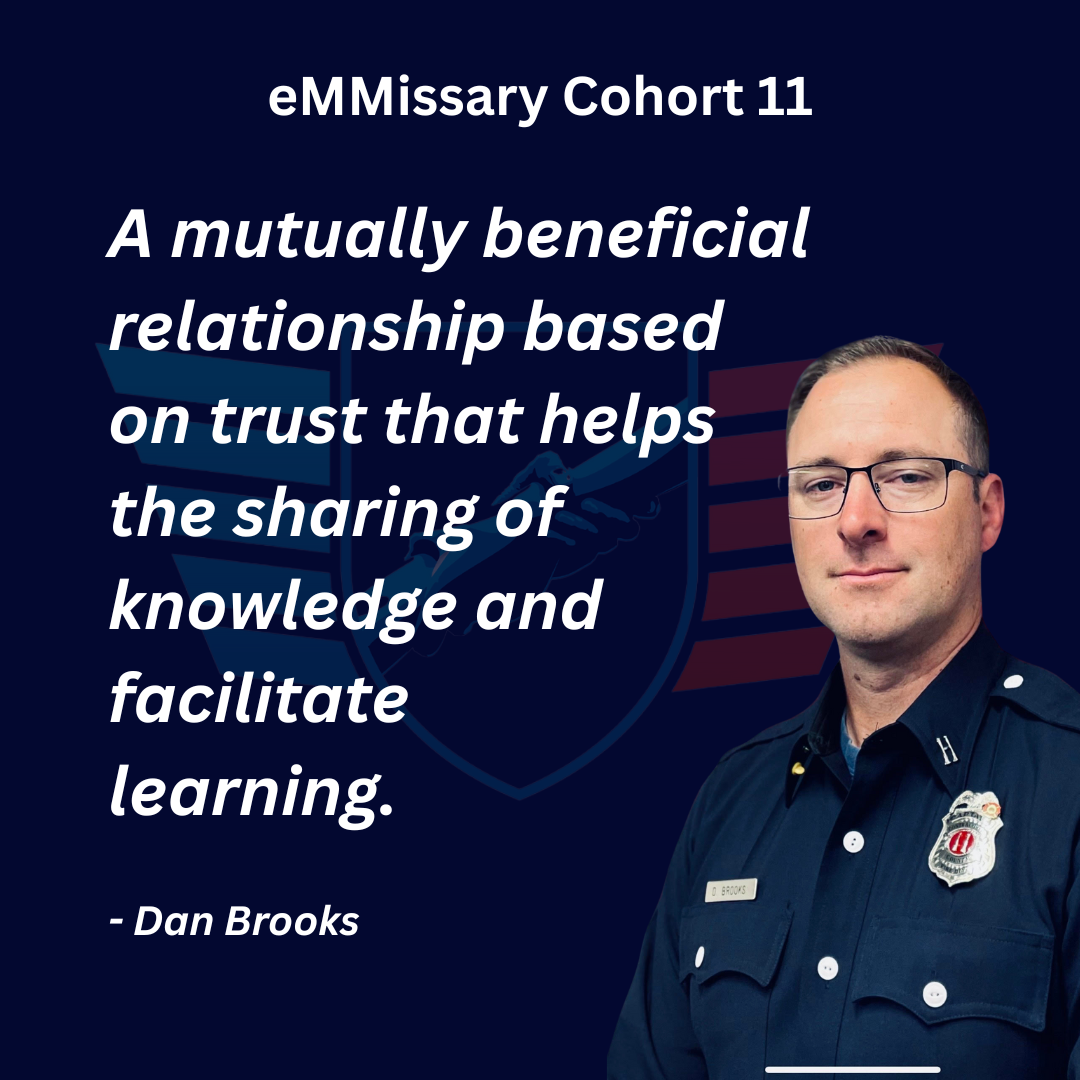
Dan Brooks is a Fire Captain/Paramedic with the Contra Costa County Fire Protection District in California. His recent assignments have focused on training, education, and safety as a Training Captain and Safety Officer. Dan is passionate about developing firefighters and preparing company officers for leadership roles. His work emphasizes building effective leaders through mentorship, professional development, and practical training. He believes strong leadership is the foundation of safer operations, stronger teams, and exceptional service to the community.

I agree that setting a goal is only the beginning; having a clear plan and taking small, practical steps makes progress much easier. Good mentors can provide the guidance and support needed to stay focused. Similarly, a personal website service can help professionals showcase their experience, skills, and achievements in one place as they work toward their career goals.