Why Mentoring?

Are you perfect in every way? Have you ever made a mistake? Have you ever needed guidance or answers from someone else? If your answers are ‘Yes,’ ‘No,’ and ‘No’ this article is not for you.
……but for the rest of us…….
Mentoring is such a nebulous concept.
I recall joining an organization in middle management. I had some associated knowledge of the industry, but had yet to develop any expertise. I didn’t know what to do, where to turn, and I felt awkward asking my new boss all the questions in my head. But, I “knew a guy”. In this case it was actually a “gal”. She knew the industry and the players, what to do, and what not to do. I could call her, ask her about anything, and know her responses would be beneficial. She would call me to check in, give much-needed guidance, and our interactions were just between us. There was trust and confidentiality, and no matter how inane the question; she wouldn’t laugh; much. But those communications helped me develop successfully in that role.
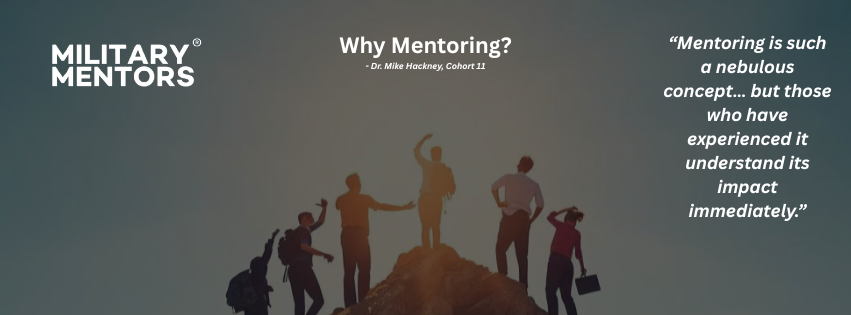
Those who have had great mentors understand the benefits of this kind of relationship. Those who have helped mold and develop someone else and watched their subsequent success, cannot help but feel a deep satisfaction for offering a hand.
But what is a mentor? Any of us in an organization or informal group, practically any recurring collection of people getting together to do something, will need help or give help. The person who gives the help may be a boss, a peer, a coach, or a team member. Some may call that interaction mentoring, but they would not be fully correct. These are all positive interactions achieving change and improvement, but they fall short of mentoring.
The unique characteristic of mentoring involves mutual trust between the mentor and mentee and the desire of the mentor to mentor and of the mentee to be mentored. The period of interaction may be relatively short, a few weeks, or it can span years or decades. In all cases, it must be voluntary, mutually desired, and naturally evolving for both parties.
“We need to mentor our people!” said the boss. Can this kind of directive lead to successful mentoring, if mentoring should be voluntary, mutually desired, and naturally evolving? Yes, it can: if set up correctly. For those of us faced with this challenge, let us consider some ways to meet the intent of the boss without violating some basic principles of effective mentorship.
The key to understanding mentoring relationships is that they cannot be compulsory, even if the boss demands it. First, identify and posture the benefits of mentoring to the team, leading to an initial awareness of how mentoring can benefit performance. Second, solicit from the group volunteers to serve as potential mentors. Third, solicit from the larger group those who desire to be mentored. Finally, set up events that provide opportunities for the potential mentors and mentees to interact and assess professional and personal compatibility to enter into a reciprocal and beneficial developmental relationship.
From that point, the personal connection may develop and effective mentoring is possible, or it does not. It may take a few rounds of events for potential mentors and mentees to find their comfort level, and they may never find it, but that is all part of the process. What is key is not compelling mentor-mentee relationships that aren’t mutually desired. It also pays to continually encourage reticent volunteers to participate as mentorship can only help an organization and its people (J. Sandvik, 2021).
Back to the opening title: Why Mentoring? Because it creates long-lasting opportunities for those with less experience to learn from those with more, without jeopardizing relationships with their boss. A boss coaches, counsels and develops; it’s part of their job. Mentors teach and guide in a non-risk environment, serving as a sounding board, when it isn’t their job at all.
References:
Sandvik, Jason, Richard Saouma, Nathan Seegert, and Christopher Stanton. 2021. "Should Workplace Programs Be Voluntary or Mandatory? Evidence from a Field Experiment on Mentorship." NBER Working Paper 29148, National Bureau of Economic Research, Cambridge, MA. Revised October 2023. http://www.nber.org/papers/w29148.
Michael Hackney, Ed.D., MBA, is CEO of ShaydeTree Consulting, focused on helping managers and executives get the best from their teams—while also getting the best out of themselves. He completed his research doctorate in organizational change and leadership (organizational psychology) at the University of Southern California, examining management and executive knowledge-gap closure in today’s hyper-change business environment. A former Army infantry officer, he has held various management and executive positions in operations and supply chain with PepsiCo, ConAgra Brands, Sara Lee, and Sigma Alimentos.


Bài viết dễ theo dõi, giải thích mạch lạc về AST nên mình đọc cái hiểu liền, cảm ơn bạn đã chia sẻ. Mình thì hay theo dõi thống kê XSMB mỗi ngày, muốn tra nhanh nên tự gom lại thành một trang tổng hợp cho tiện xem lại. Ai cũng quan tâm số liệu cập nhật theo ngày thì ghé qua https://artconomy.com/profile/Soicauxsmbpro/about/
Trước đây mình loay hoay khá lâu mới chọn được addon Minecraft PE hợp với resource pack để cài, vì nhiều cái nhìn hay nhưng vào máy lại lệch tông. Mình thường ưu tiên shader nhẹ cho máy yếu, rồi đổi thêm vài map để đi đâu cũng thấy mới mẻ hơn. Trong group cũng hay nhắc mấy addon dạng furniture hoặc alien invasion, nhất là khi có đánh giá sao rõ ràng thì đỡ mất công thử bừa. Nên mình ít khi tải theo lời truyền miệng, mình chọn nơi nào cập nhật đều và dễ kiểm tra nguồn. thuvienmc Mình hay ghé thuvienmc.com khi cần tìm addon Minecraft PE, resource pack và map miễn phí.
Mình thường xuyên lướt tin về bitcoin rồi xem thêm vài góc nhìn phân tích kỹ thuật để nắm nhịp tăng giảm của thị trường crypto mỗi ngày. Có những bài dự đoán giá kèm tin altcoin, memecoin thì mình dễ hình dung bức tranh tổng thể hơn trước khi quyết định vào lệnh hay tạm đứng ngoài. https://tapchibitcoin.io/ là chỗ mình hay ghé để cập nhật nhanh, sau đó mình tự mở biểu đồ ra đối chiếu lại cho chắc. Thỉnh thoảng mình cũng đọc chia sẻ trong cộng đồng, nhiều người khuyên nên xem thêm phân tích on-chain và chọn lọc các tin vắn crypto vì thường bám sát dữ liệu hơn là cảm tính. Với các coin…
Mình chơi xổ số kiểu giải trí là chính, nên thường chỉ mở kết quả lên xem cho vui chứ không đặt nặng chuyện đổi đời. Trước đây nghe bạn bè rỉ tai đủ thứ “cầu” này “cầu” kia, mình cũng thử theo dõi một thời gian cho biết. Về sau mới nhận ra đôi lúc có vài chi tiết lặp lại khiến mình chú ý hơn, nhưng mình vẫn tự nhắc phải tỉnh táo. Mỗi khi đọc mấy bài nhận định, mình hay ghi lại vài ý ngắn rồi đợi kết quả để đối chiếu, coi như kiểm tra xem mình có đang tự ám thị không. Trúng chút thì vui, còn sai thì xem như trải nghiệm. Gần…
Mình không thuộc dạng đánh theo cảm xúc cho lắm, nhưng cũng chẳng đặt nặng chuyện hên xui. Thường mình hay ngồi xem lại vài kỳ gần đây, ghi chú những nhóm số hay lặp rồi lọc ra mấy con mình thấy hợp mắt để thử vận may. Có hôm trúng được chút thì vui vui, còn hôm nào trật hết thì coi như bỏ, chủ yếu để xả stress sau giờ làm. Mấy bài kiểu dự đoán xổ số miền bắc mình đọc cho biết thôi, nhất là đoạn nói về cầu với thống kê, nghe cũng có lý nếu mình tỉnh táo. Mình tự nhắc là chơi vừa phải, biết dừng đúng lúc kẻo cuốn theo. Thỉnh thoảng…