Don’t Skip Lunch: The Case for Sustainable Leadership
Most military members are familiar with Simon Sinek’s book, “Leaders Eat Last”, and its driving principle that great leaders make personal sacrifices to ensure the safety of their teams. Sinek never says to not eat and yet sometimes, when we find ourselves over-saturated with tasks and demands from the field, we allow ourselves to skip meals.

One of the most important leadership lessons I learned thus far is to never skip lunch. You cannot serve others when you have not dedicated time for self balance. Eating, used in a literal meaning, but also a symbol for self preservation. We must recognize that work-life balance is no crime nor abandonment of the oath we take, but rather an insurance of endurance in the long race that is leadership.
In the Office of Special Investigations (OSI), no matter what rank or position, a normal 8 hour day always has the potential to turn into a 24+ hour day where you may be unable to leave a location to return home. If you decided to skip lunch because you prioritized the mission, chances are when another “emergency” occurs that requires working a late shift, it’s going to be more difficult when you have not properly fueled up. There were a few times early in my career that I skipped lunch just for an all-hands-on-deck crime scene to pop up where, as a leader, I would be required to make sound, quick but unimpulsive decisions that would shape the entirety of the investigation. Late shifts would also mean that dinner would not be consumed until all of the crime scene and evidence could be processed and, by that time, dinner was breakfast. Weekends would turn to weekdays. Leave stacked up and use-or-Lose was lost. Lifetime events and celebrations were missed, but the mission went on.
After a while, I noticed my troops also began to skip lunch and put the mission first. This was the wake up call I needed to show me that I was leading by the wrong example. From that point on, I promised to make time for lunch and to ensure my troops did the same. I read a study that individuals sharing a meal together experienced deeper bonding, so each day we began to eat lunch as a team. Even if we only had 20-30 minutes to eat, we began to know and understand each other in a more relaxed environment that became a bubble of protection for the daily madness.
We worked to develop a better system to allow more leave for all members while also considering manning restraints. Over time, I realized that eating, resting, and attending to personal commitments did not hurt the mission but increased readiness by ensuring I had enough fuel in my tank. Instead of working task-by-task with my head glued to the desk, I raised it to look up and out and focus on the long term success of the mission and the wellness of the people. In the same vein, the high operational tempo missions did not stop, but I developed a better way to fight hunger and kept snacks in our duty vehicles and go bags.
So, the next time you attempt to rationalize skipping that next meal and want to eat stress instead, fight the urge.
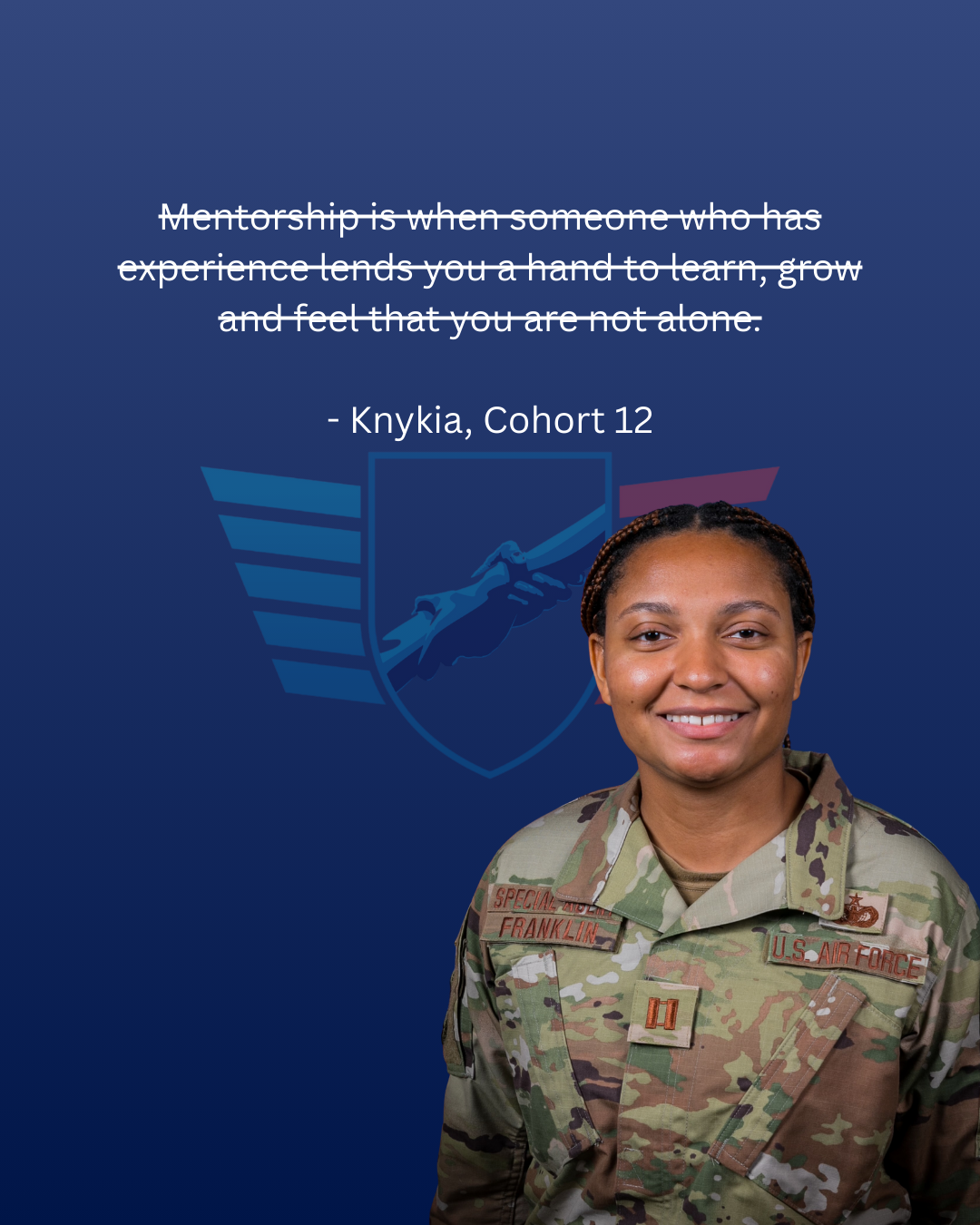
Special Agent (SA) Knykia Franklin has served as federal law enforcement officer for eight years with the Department of the Air Force’s (DAF) Office of Special Investigations (OSI). She has held several leadership positions during her tenure and in her last assignment, she oversaw DAF’s counterintelligence investigations and operations in Japan. SA Franklin currently serves as an Action Officer for OSI command’s global counterintelligence efforts.


Comments