Mentorship Ghosting: Why Mentors and Protégés Disappear
Mentorship has long been celebrated as a cornerstone of professional growth, yet traditional mentorship programs often fall short. Many formal mentor-protégé pairings dissolve within months, leaving both parties frustrated and questioning the value of the relationship.1 This phenomenon, sometimes referred to as “mentorship ghosting,” can occur when either mentor or protégé disengages abruptly without explanation. While often framed as a personal failure, ghosting frequently reflects structural issues in mentorship programs. This article explores why these relationships falter and proposes a more sustainable approach: starting with peer mentorship and expanding into a “constellation of stars” — a network of mentors that provides diverse guidance and support.2

Why Mentorship Ghosting Happens
Mentors
Mentors can disengage for multiple reasons. Heavy workloads, competing priorities, or burnout can limit their availability.3 In formalized programs, mentors may feel that the assigned protégé is not receptive, or the pairing simply lacks chemistry, prompting early withdrawal.4 Even well-intentioned mentors may struggle to maintain consistent engagement if the structure of the program does not allow for natural rapport-building.
Protégés
Protégés may also withdraw from mentorship relationships. Anxiety about appearing inexperienced, mismatched goals, or the perception that a mentor is unapproachable can all lead to disengagement.5 Some protégés passively stop responding when they feel the mentorship is not meeting their needs or if life circumstances change. Importantly, ghosting by protégés is often less about disinterest and more about self-preservation or shifting priorities.6
Limitations of Formalized Mentorship Programs
Traditional mentorship programs frequently pair participants based on availability or broad criteria rather than compatibility or shared goals.7 The programs are often short-term, typically running for a few months, which makes sustained relationships unlikely.8 This arbitrary structuring can inadvertently foster disengagement, as participants may never feel a genuine connection or shared purpose. Authentic mentorship, which thrives on trust, mutual interest, and meaningful guidance, is often incompatible with rigid formal programs.
One way to counter these challenges is through peer mentorship. Mentors who are peers, similar in age, experience, or career stage, often share common challenges and organizational pressures, making guidance more practical and relatable.9 Peer mentorship reduces hierarchical pressure, encourages reciprocity, and allows for mutual learning. For example, two early-career professionals navigating a new role can exchange strategies for managing workload, presenting ideas in meetings, or building visibility within an organization. These relationships tend to be more flexible, allowing for natural growth and adaptation without the stress of formal obligations.10
No single mentor can fulfill all developmental needs. The constellation model encourages protégés to cultivate a network of mentors, each providing different perspectives and expertise.11 Some mentors may provide technical guidance, others strategic career advice, and still others emotional support or networking opportunities. This model acknowledges the inherent impermanence of individual mentorships and reduces the impact of disengagement.
By approaching mentorship as a constellation, protégés can also include mentors from outside the organization, broadening perspectives and increasing opportunities. For instance, a protégé may have a peer mentor within the team, a senior mentor in the company for strategic guidance, and an external mentor in their professional network for industry insights.12 Ghosting in any single relationship becomes less detrimental when guidance is distributed across multiple mentors.
Practical Recommendations:
Start with Peer Mentorship: Encourage early-career professionals to build connections with peers who share similar experiences.
Diversify Mentorship Networks: Promote the constellation model to ensure protégés have multiple sources of guidance.
Normalize Communication: Regular check-ins, even brief ones, can prevent misunderstandings and disengagement.
Flexible Formal Programs: While formal programs can be valuable, they should allow organic matching and adaptation over time.
Training and Resources: Provide mentors and protégés with guidance on effective communication, goal setting, and relationship management.
Mentorship need not be fragile or short-lived. The challenges often arise from rigid program structures, arbitrary pairings, and unrealistic expectations. Peer mentorship provides a relatable and low-pressure entry point, while the constellation model ensures protégés receive holistic support across multiple relationships. By rethinking mentorship in this way, organizations can cultivate resilient, meaningful guidance networks, allowing individuals to grow professionally without fear of abrupt disengagement or “ghosting”.
1. Mentor Collective. (2023, February 1). Speak up! Fighting ghosting in your mentorship. Mentor Collective. https://www.mentorcollective.org/blog/speak-up-fighting-ghosting-in-your-mentorship
2. Center for Faculty Excellence. (n.d.). Mentorship constellations. University of Nebraska Omaha. https://www.unomaha.edu/faculty-support/_files/mentorship-constellations
3. Gotian, R. (2024, July 1). Ghosted by your mentor? Here's how to bounce back stronger. Psychology Today. https://www.psychologytoday.com/us/blog/optimizing-success/202406/ghosted-by-your-mentor-heres-how-to-bounce-back-stronger
4. Haines, Stuart. (2003). The Mentor-Protégé Relationship. American journal of pharmaceutical education. 67. 10.5688/aj670382.
5. Burk, H. G., & Eby, L. T. (2010). What keeps people in mentoring relationships when bad things happen? A field study from the protégé's perspective. Journal of Vocational Behavior, 77(3), 437–446. https://doi.org/10.1016/j.jvb.2010.05.011
6. Gotian, R. (2024, July 1). Ghosted by your mentor? Here's how to bounce back stronger. Psychology Today. https://www.psychologytoday.com/us/blog/optimizing-success/202406/ghosted-by-your-mentor-heres-how-to-bounce-back-stronger
7. 10KC. (n.d.). Mentorship ghosting: Why relationships fade and how peer mentorship can help. https://www.tenthousandcoffees.com/blog/mentoring-challenges-and-solutions
8. 10KC. (n.d.). Mentorship ghosting: Why relationships fade and how peer mentorship can help. https://www.tenthousandcoffees.com/blog/mentoring-challenges-and-solutions
9. Chronus. (2025, May 30). What is peer mentoring and when to choose this program. https://chronus.com/blog/peer-mentoring
10. Barnard, B. (2024, February 5). Mentors among us: The power of peers. Forbes. https://www.forbes.com/sites/brennanbarnard/2024/02/05/mentors-among-us-the-power-of-peers/
11. Center for Faculty Excellence. (n.d.). Mentorship constellations. University of Nebraska Omaha. https://www.unomaha.edu/faculty-support/_files/mentorship-constellations
12. Center for Faculty Excellence. (n.d.). Mentorship constellations. University of Nebraska Omaha. https://www.unomaha.edu/faculty-support/_files/mentorship-constellations
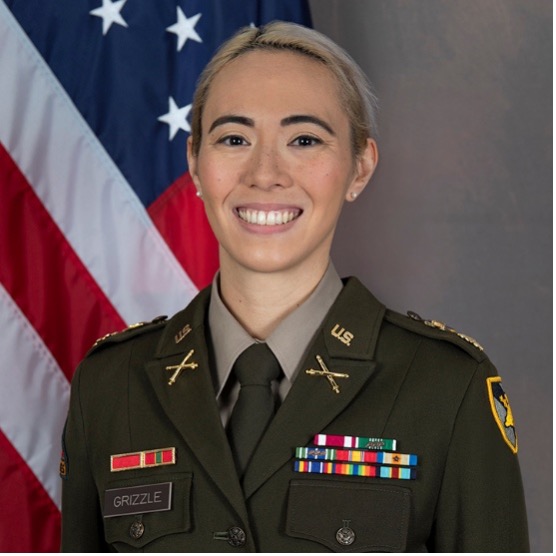
MAJ Catherine Grizzle, a native of Springfield, Virginia, is a Field Artillery Officer currently serving as an Instructor in the Department of Behavioral Sciences and Leadership at the United States Military Academy (USMA) West Point. A graduate of Virginia Tech, she holds an MBA from the University of North Carolina at Chapel Hill and an MA in Education and Human Development from The George Washington University. Stationed at USMA with her dog, Thunder, she enjoys performing stand-up comedy, sketch writing, and acting in her free time. She is committed to mentoring others and fostering lifelong learning to empower tomorrow’s leaders.



Comments